
4 Green Building Technologies Changing the Way We Build
From low-carbon materials to AI-powered design — what's next for sustainable architecture in India?
The construction industry stands at a turning point. As climate concerns intensify and resources grow scarcer, the way we design and build is being reimagined from the ground up. At RUA Ecospaces LLP, we believe sustainability isn’t a trend — it’s the foundation of every project we take on.
Here are four technologies leading this transformation, and why they matter for the future of Indian architecture.
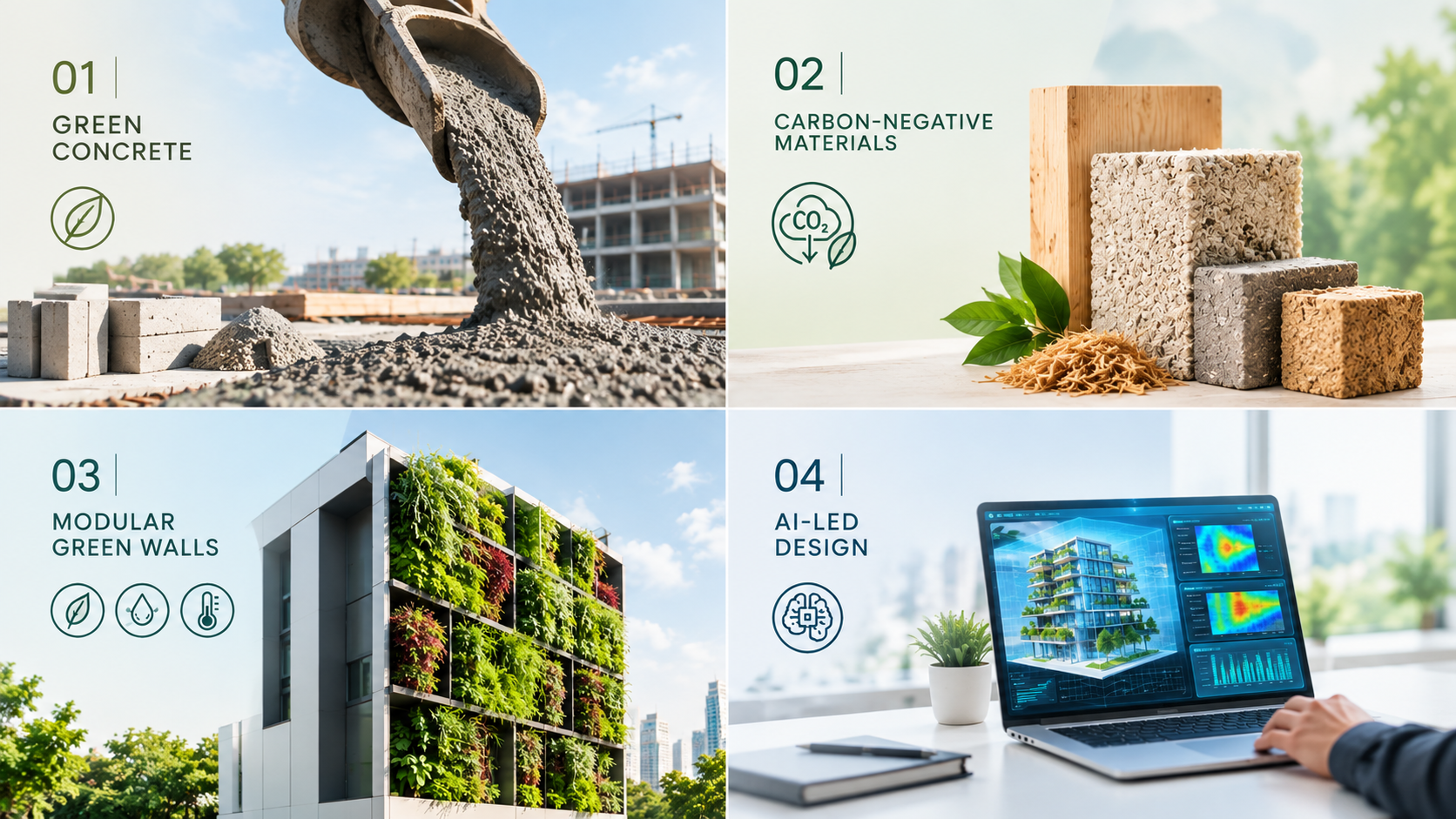
01 | Green Concrete
Concrete is the most widely used building material in the world — and one of the biggest contributors to carbon emissions. Green concrete offers a smarter alternative: an eco-friendly building material that replaces a portion of traditional cement and natural aggregates with recycled industrial waste or by-products.
Why it matters:
- Lower emissions — cuts carbon dioxide output during production by 30% to 40%
- Less waste — keeps industrial garbage out of local landfills
- Good strength — matches or beats the durability of standard concrete
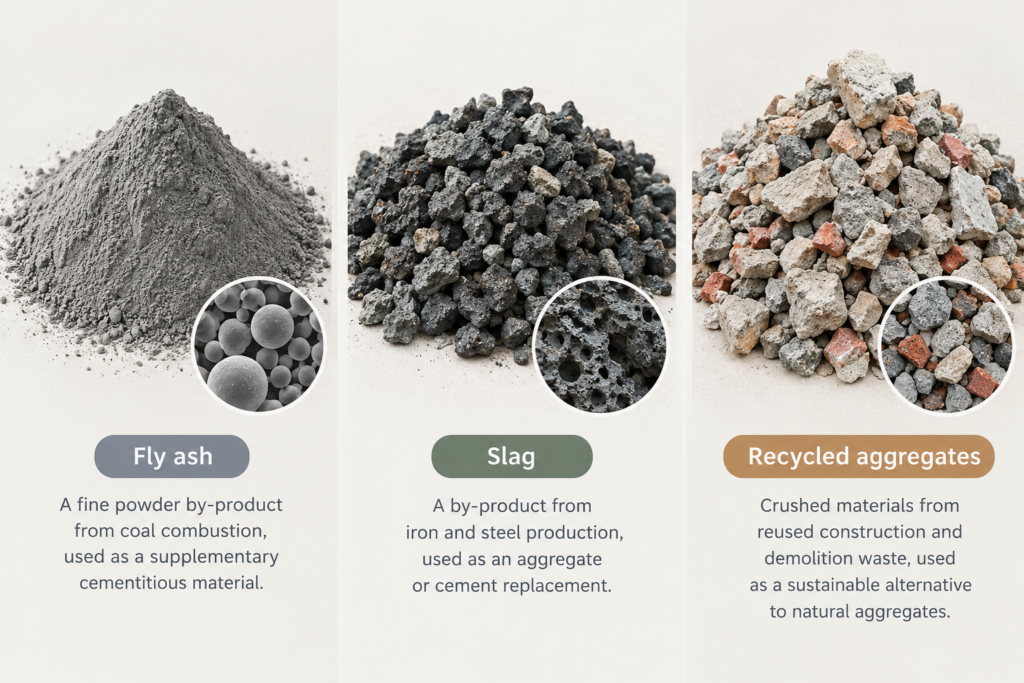
Some of the key ingredients driving this shift include fly ash, a waste product from coal power plants that replaces some cement; slag, a recycled industrial by-product blended with Portland cement to improve durability, strength, and workability; and recycled aggregates — crushed old concrete used instead of new rock and gravel.
LOWER CARBON. SAME AMBITION.
02 | Carbon-Negative Materials
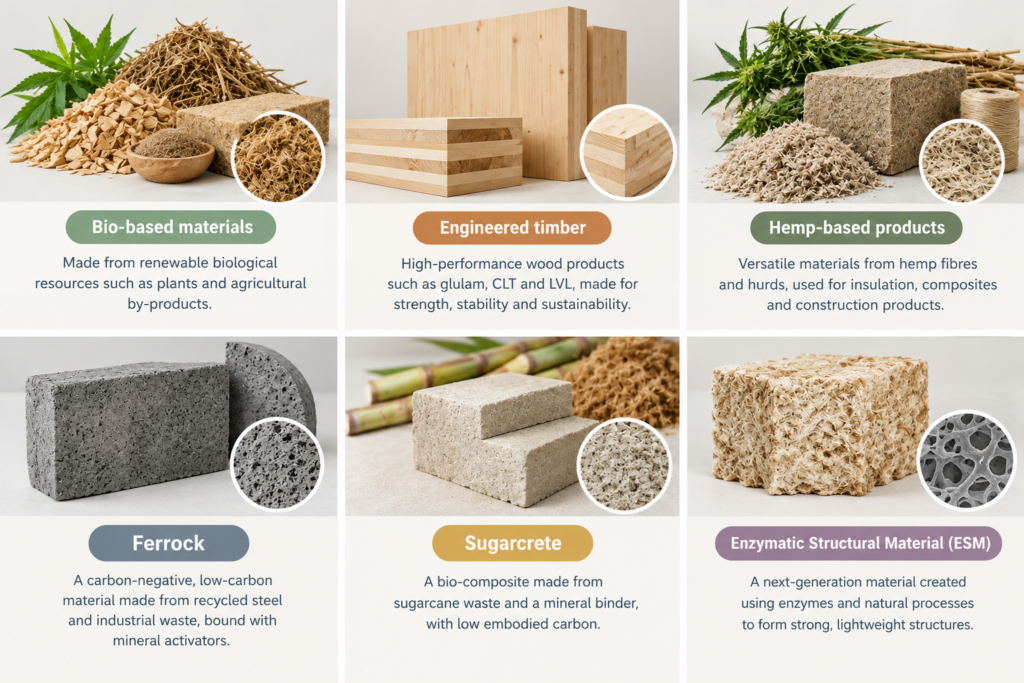
What if the walls of a building could actively fight climate change instead of contributing to it? Carbon-negative construction materials capture and store more carbon dioxide than they release across their entire lifecycle — turning buildings into genuine carbon sinks.
This category includes a fascinating range of innovations:
- Bio-based materials — derived from natural, renewable sources
- Engineered timber — structurally strong wood products that lock in carbon
- Hemp-based products — fast-growing, low-impact, and highly versatile
- Ferrock — a material made largely from recycled steel dust that actually absorbs CO₂ as it cures
- Sugarcrete — an emerging material developed from sugarcane by-products
- Enzymatic Structural Material (ESM) — a new generation of bio-engineered building blocks
These materials represent a fundamental shift in mindset: from minimizing harm to actively reversing it.
MATERIALS THAT CAN STORE MORE CARBON THAN THEY EMIT.
03 | Modular Green Walls
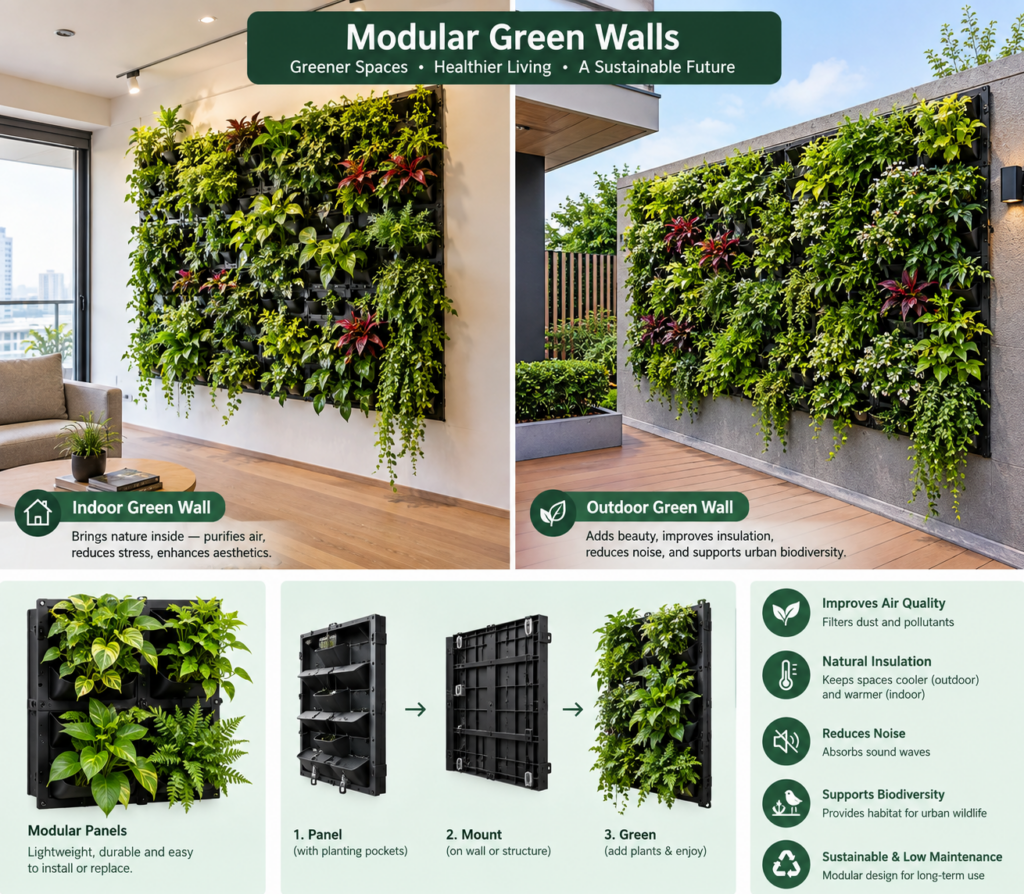
Vertical greenery is no longer a luxury reserved for flagship buildings — it’s becoming an accessible, scalable design solution. Modular green walls are prefabricated grid systems designed to hold either live plants or realistic faux foliage directly on indoor or outdoor vertical surfaces.
Because these systems snap together like puzzle pieces, homeowners and commercial designers alike can transform plain, empty walls into lush vertical statement pieces — without major structural modification.
Beyond aesthetics, green walls contribute to improved air quality, natural insulation, noise reduction, and a stronger connection between built spaces and nature — a principle close to our human-centric approach to design.
MODULAR. EFFICIENT. SCALABLE.
04 | AI-Led Design
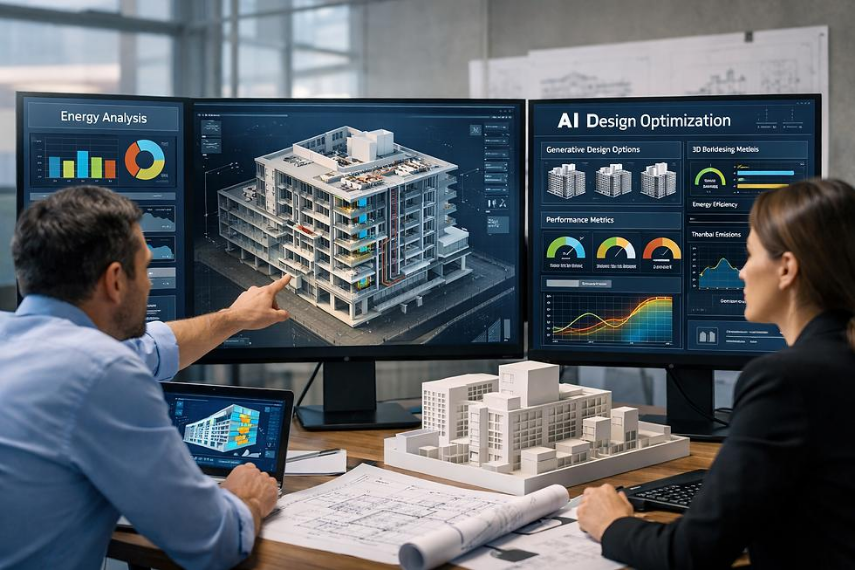
Artificial intelligence is quietly transforming how buildings are conceived, tested, and optimized long before construction begins. AI speeds up and improves energy simulations by replacing slow, traditional physics calculations with fast machine learning models.
This means architects and engineers can now:
- Run generative design options in a fraction of the time
- Evaluate multiple 3D building methods side by side
- Analyze performance metrics, energy efficiency, and emissions in real time
- Make smarter, data-backed decisions at every stage of design
The result is buildings that aren’t just designed — they’re engineered for efficiency from day one.
SIMULATE. OPTIMISE. BUILD BETTER.
The Future of Building Is Already Being Built
Around the world, these technologies are moving from concept to construction. Hempcrete homes are already standing in places like La Veta, Colorado — proof that sustainable materials aren’t just theoretical, they’re buildable today.
The question for architects, developers, and homeowners in India is no longer if these technologies will shape our built environment, but how quickly we adopt them.
Which innovation will transform architecture next?
RUA Ecospaces — Your Partner for a Sustainable Tomorrow!
At RUA Ecospaces LLP, we bring a human-centric approach to sustainable design, integrating the latest green building technologies with thoughtful, functional architecture. Whether you’re planning a home, a commercial space, or a large-scale development, we’re here to help you build responsibly — without compromising on design.
📞 +91-9920038250